AW139: which aircraft remain within AD 2025-0094R2?
The revision effective on 2 September 2026 narrows applicability. Check the helicopter serial number first, then identify its inspection group.
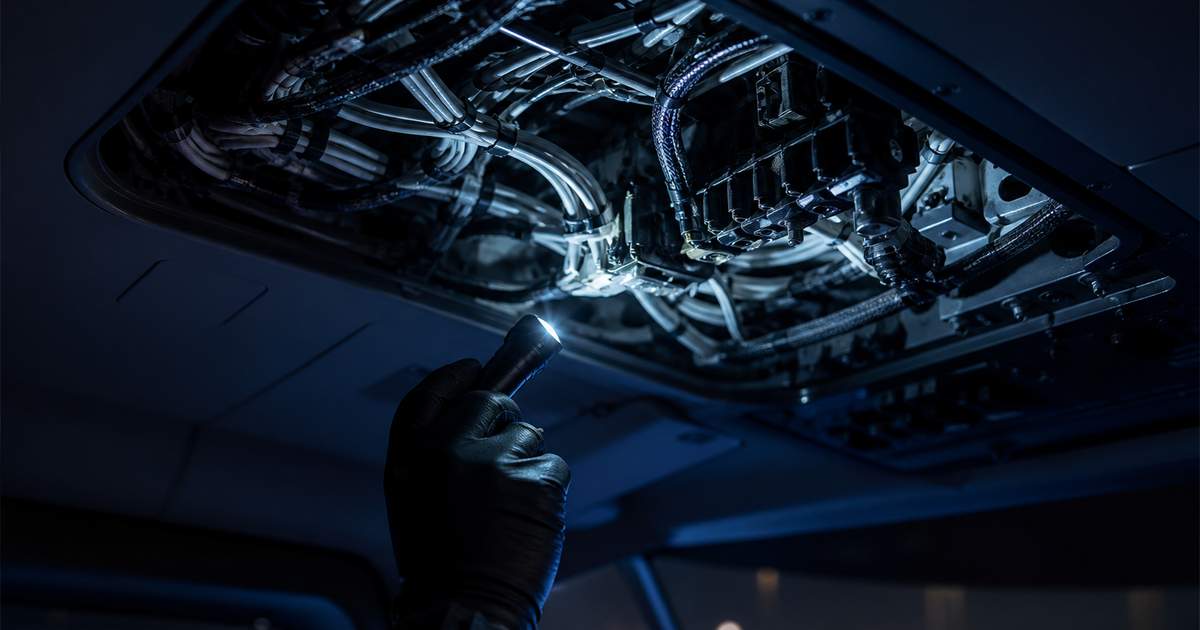
EASA AD 2025-0094R2 addresses wiring in the panel above the pilots of AB139 and AW139 helicopters. Issued on 26 August 2026 and effective from 2 September, this revision narrows the aircraft population covered. Start by comparing the helicopter’s serial number with both applicability ranges, then identify its inspection group.
An AD, or Airworthiness Directive, is mandatory for the aircraft to which it applies. In this case, electrical cables can interfere with neighbouring connectors. Damage could lead to a fire in the overhead panel and loss of helicopter control. Source: EASA record and R2 PDF, pages 1 and 2.
Check two serial ranges, then two groups
R2 applies to AB139 and AW139 serial numbers 31201 to 32999 or 41201 to 41999, inclusive. An aircraft is outside this applicability when its serial number falls in neither range. A number above 32999 is therefore not enough to rule it out: the second range still matters.
Within that population, Group 1 comprises serial numbers 31201 to 32087, 41201 to 41598 and 41801 to 41812, excluding the serial numbers listed in Appendix 1. All other aircraft within the AD’s applicability are Group 2. A serial number listed in the appendix is excluded from Group 1, not from the AD.
The AD explains that Long Nose configurations underlie the revised scope. For an individual aircraft, use the written applicability and group definitions, including the appendix, rather than its appearance alone. Source: R2 PDF, pages 1, 2 and 5.
Separate the initial work from recurring inspections
For Group 1, paragraph 1 requires an initial detailed inspection within 150 flight hours or 12 months after 8 May 2025, whichever occurs first. Paragraph 5 then requires modification of the panel before the next flight after that inspection. R2’s effective date does not restart this period.
Both groups remain subject to the repetitive inspection in paragraph 2, at intervals no longer than 300 flight hours or 12 months, whichever occurs first. The first such inspection has a different starting point for each group:
- Group 1: within 300 flight hours or 12 months after the initial inspection under paragraph 1, whichever occurs first.
- Group 2: within 300 flight hours or 12 months after 8 May 2025, whichever occurs first.
Paragraph 6 provides no terminating action for the repetitive inspections. The Group 1 modification therefore does not end them. An alternative method of compliance requires EASA approval under Remark 1. Source: R2 PDF, paragraphs 1 to 6 and Table 1, pages 2 and 3.
Findings require correction before the next flight
Discrepancies defined by the manufacturer’s bulletin and found during the inspections must be corrected before the next flight under paragraphs 3 and 4. If such a discrepancy is found, paragraph 7 also requires reporting to Leonardo within 30 days after the relevant inspection or after 8 May 2025, whichever is later.
The working instructions and technical criteria are in Leonardo Alert Service Bulletin, or ASB, 139-801. The AD cites the original issue of 31 March 2025 or Revision A of 24 February 2026 and accepts later approved revisions. The maintenance team needs those instructions; this article does not reproduce them. Source: R2 PDF, page 3.
Make the decision traceable in the aircraft records
Our recommendation is to keep the aircraft identification, the AD revision examined, the reasoning for its group or non-applicability and the completed inspection records together. For an applicable aircraft, add the hours and dates used to calculate the next deadline, plus any corrective work and reports.
R2 revises R1, issued on 3 July 2026 and effective on 10 July. It does not establish that earlier work is unnecessary or that an aircraft may fly based on this summary alone. The helicopter’s records and applicable instructions remain necessary for the operational decision.
Frequently asked questions
Which AB139 and AW139 helicopters does R2 cover?
Aircraft with serial numbers 31201 to 32999 or 41201 to 41999, inclusive. Both ranges must be checked before concluding that the AD does not apply.
Is Group 2 exempt from inspections?
No. Among aircraft within the AD’s applicability, those outside Group 1 belong to Group 2. The repetitive inspections in paragraph 2 apply to both groups.
Does revision 2 restart the compliance periods?
No. R2 takes effect on 2 September 2026, but the starting points in paragraphs 1 and 2 and Table 1 remain 8 May 2025 or the initial inspection, depending on the group.
A project, a regulatory question?
Kepler Aviation supports aviation stakeholders on AI, blockchain and document compliance. Let's talk about your needs.
Contact us