Lycoming: check FAA AD 2026-17-10
Which engines to check, why a piston pin certificate matters and how to prepare for 14 September 2026.
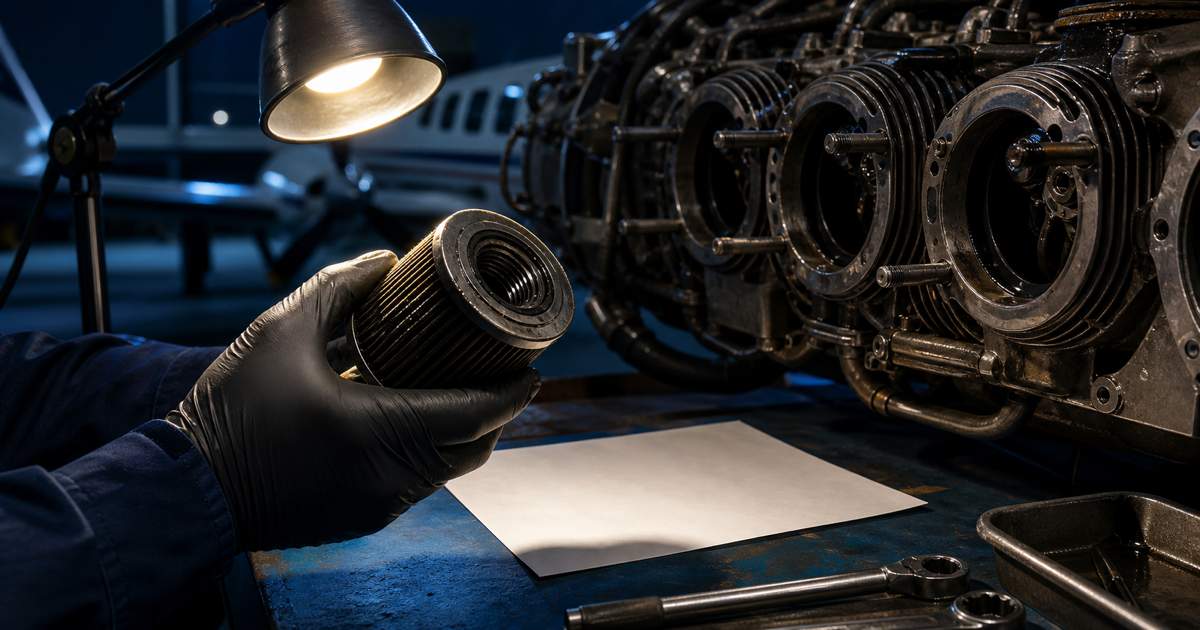
If your aircraft has a Lycoming O-235, O-540 or IO-540 engine, ask your maintenance shop whether it falls within FAA AD 2026-17-10. An AD, or airworthiness directive, imposes safety actions on the products it covers. Here, certain piston pins can fail and cause engine failure. The exact model, serial number and pin records determine the next steps.
As of 12 September 2026, this AD is not yet effective: its effective date is 14 September. Gather the records and hours accumulated since the affected pins were installed now. This AD’s deadlines have not been running since publication; existing maintenance requirements applicable to your aircraft still need to be met.
The records that establish whether you are affected
The FAA text published on 28 August 2026, also available as a PDF hosted by EASA, defines applicability in paragraph (c). Check these elements together:
- The exact engine model, among the O-235, O-540 and IO-540 variants listed in the AD.
- Its serial number, in Table 2 or 3 of Lycoming Service Bulletin 667A dated 12 March 2026.
- An installed piston pin with part number LW-13445, and its original equipment manufacturer’s FAA Form 8130-3 for production dated from 7 January 2021 to 15 December 2025.
A piston pin connects the piston to the connecting rod inside the engine. LW-13445 is its part number. Form 8130-3 is an aviation certification document; this AD requires the original manufacturer’s production form. An invoice date, installation date or later maintenance release date does not replace that production date.
Within this scope, if the production date cannot be determined or the form is unavailable, the AD applies. This is neither a presumption of fraud nor a rule covering every Lycoming engine with a missing document. An unidentified model, serial number or part still requires investigation; it does not justify declaring the engine outside the scope.
Two separate questions: when to inspect and when to replace
TIS, or time in service, is measured for maintenance time records from lift-off until the aircraft touches the surface at its next landing, under the FAA definition in 14 CFR 1.1. It therefore does not include all engine running time on the ground. Several thresholds here depend on TIS hours accumulated since the affected pins were installed, rather than simply the aircraft’s total hours.
Paragraph (h)(1) requires an oil change and visual inspection of the engine oil filter, oil pressure screen and oil suction screen for metal particulates:
- Table 3 engine with more than 150 hours TIS since the affected pins were installed: before further flight from the effective date.
- Other affected engines: if an oil change has not been performed within the last ten hours TIS, within five hours TIS after the effective date.
Replacement is addressed separately in paragraph (h)(2):
- Particulates found during the inspection: replace affected pins before further flight.
- No particulates, Table 2 engine: at the next removal of a cylinder containing an affected pin or the next overhaul, whichever comes first after the effective date. The overhaul limit in Service Instruction 1009BE dated 24 April 2020, referenced by the AD, must not be exceeded.
- No particulates, Table 3 engine at 150 hours TIS or less since pin installation: within 25 hours TIS after the effective date, without exceeding 150 hours since installation. An engine already at 150 hours therefore does not gain another 25 hours.
A case to address explicitly with the shop: Table 3, more than 150 hours, no particulates. The AD clearly requires inspection before flight, but its replacement deadline list in (h)(2)(i) through (iii) does not state a separate branch for this case. Page 2 of bulletin 667A calls for replacement within five operating hours if the bulletin 480 procedure recommends no corrective action. This manufacturer’s interval must not be presented as a 25-hour allowance granted by the AD. Have the competent organisation establish the applicable course of action, with authority clarification if necessary, before planning a flight that depends on this interpretation.
Stock and aircraft within the EASA system
Paragraph (i) prohibits installing an affected pin on any engine after the effective date. This installation prohibition is separate from the scope for already equipped engines in paragraph (c). An LW-13445 pin with an unavailable form or indeterminable production date falls within the affected-pin definition in paragraph (g)(2).
Paragraph (g)(1) defines parts eligible for installation for this AD’s purposes. This does not mean that any pin with a different part number fits your engine: compatibility and other installation requirements still apply.
The EASA US-2026-17-10 entry, checked on 12 September 2026, records the AD as considered adopted within the EASA system, effective 14 September 2026. Do not wait for a new directive with a European number to assess applicability. The entry shows no correction or superseded directive as of that check.
What you can prepare today
Send your shop or CAMO, the organisation managing continuing airworthiness, the engine identity, its table classification, pin part numbers and production documents, installation date, accumulated hours and latest oil change and inspection record. Ask for a recorded applicability conclusion, supporting reasons and assigned deadlines.
Where something is missing, record precisely what it is, who should supply it and when a response is due. After maintenance, retain inspection results, replaced-part references and release documents. Digital records can help locate these items; they do not perform the inspection or make the technical decision.
For a transfer between staff, our worked maintenance records handover example shows how to keep unresolved questions visible until they are answered.
Frequently asked questions
Does a missing form bring every Lycoming engine into scope?
No. First check the models and serial numbers covered by paragraph (c), and whether an LW-13445 pin is installed. Within that scope, an unavailable Form 8130-3 or an indeterminable production date makes the AD applicable.
Does the AD apply within the EASA system?
EASA’s US-2026-17-10 entry records adoption and an effective date of 14 September 2026. Check that entry and the status applicable to your aircraft with the organisation responsible for its continuing airworthiness.
Is a flight to the maintenance shop automatically allowed?
No. Paragraph (k) allows special flight permits to be issued under conditions for replacement when no metal particulates are present. It does not permit them for reaching an inspection and is neither an individual permit nor a European flight authorisation.
A project, a regulatory question?
Kepler Aviation supports aviation stakeholders on AI, blockchain and document compliance. Let's talk about your needs.
Contact us